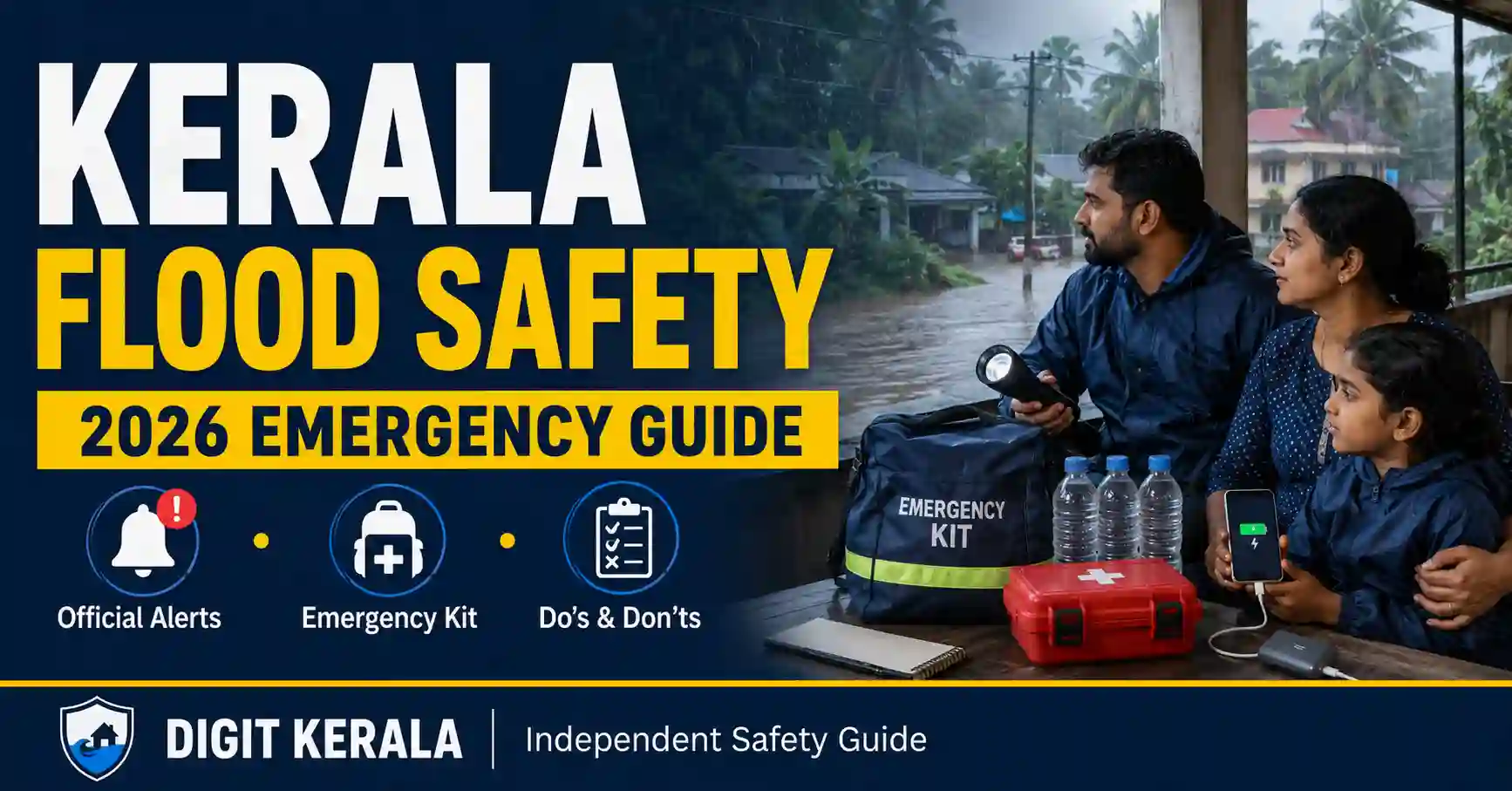
Heavy rainfall, river flooding and urban waterlogging can develop quickly during Kerala’s monsoon season. Families living near rivers, canals, low-lying areas, hill slopes and locations with poor drainage should prepare before conditions become dangerous.
This Kerala Flood Safety Guide explains where to check official warnings, what to include in an emergency kit, how to prepare your family and what to do before, during and after a flood.
Important: This article is a general preparedness guide and does not provide live weather or flood alerts. For current information, always check the Kerala State Disaster Management Authority, India Meteorological Department and instructions issued by your district administration.
Where to Check Official Flood and Rain Alerts in Kerala
Weather warnings and emergency information should be confirmed through official sources. Avoid making decisions based only on social-media messages, forwarded voice notes or old screenshots.
Kerala State Disaster Management Authority
The Kerala State Disaster Management Authority publishes information related to rainfall, floods, high waves, dam levels, lightning, strong winds and other hazards affecting Kerala.
Check the date, time and affected districts mentioned in each warning. An old warning shared again on social media may no longer be valid.
India Meteorological Department
The IMD Meteorological Centre Thiruvananthapuram publishes official weather forecasts, district-level warnings and rainfall information for Kerala and Lakshadweep.
Weather conditions can change quickly. Always check the latest bulletin instead of depending on an earlier forecast.
SACHET Disaster Alert Portal
The SACHET Disaster Alert Portal provides disaster-related alerts and safety information from authorised agencies.
Residents should also follow verified announcements from their district administration, local body, police, fire and rescue services and authorised emergency control rooms.
Create a Family Flood Emergency Plan
A family emergency plan helps everyone act quickly if an evacuation instruction is issued.
Your family plan should include:
- A safe meeting place outside the flood-prone area.
- A family member or friend who can act as an emergency contact.
- A safe evacuation route and an alternative route.
- Transport arrangements for children and older adults.
- Assistance for persons with disabilities or medical conditions.
- A plan for safely evacuating pets and livestock.
- A list of prescribed medicines and important medical requirements.
- Contact information for family members and nearby neighbours.
- Waterproof copies of important documents.
Ensure that every family member understands the plan. Children should know whom to contact and should never be asked to cross floodwater alone.
Kerala Flood Emergency Kit Checklist
Keep the emergency kit in a waterproof and easily accessible bag. Its contents should be suitable for the number of people in your household and their individual requirements.
Consider including the following items:
- Safe drinking water.
- Ready-to-eat or dry food.
- Prescribed medicines and copies of prescriptions.
- A basic first-aid kit.
- Torch or headlamp with spare batteries.
- Fully charged power bank and charging cables.
- Battery-operated radio, if available.
- Whistle for attracting attention.
- Raincoat, dry clothes, towels and blankets.
- Soap, sanitiser, masks and sanitary products.
- Baby food, diapers and feeding supplies when required.
- Essential items required by older adults.
- Necessary equipment for persons with disabilities.
- Pet food, leash or suitable pet carrier.
- A small amount of emergency cash.
- Copies of identification, medical and property documents.
- Emergency contact details written on paper.
Place documents, medicines and electronic items in sealed waterproof covers. Inspect the kit periodically and replace expired food, medicine and batteries.
What to Do Before a Flood
Preparing early is safer than waiting until water begins entering the area.
Monitor Official Information
Check KSDMA, IMD and district administration announcements regularly during periods of heavy rain. Keep your phone charged and enable relevant emergency notifications when available.
Protect Documents and Essential Items
Move identification documents, certificates, medicines, valuables and essential electronic devices to a higher and dry location.
Store household chemicals, cleaning products and fuels safely so that they do not leak into floodwater.
Prepare the House
If it is safe to do so, take the following precautions:
- Clear household drainage openings without entering dangerous water.
- Secure loose objects kept outside the house.
- Move furniture and appliances to a higher level.
- Move vehicles away from low-lying parking areas before flooding begins.
- Learn how to safely turn off electricity, water and gas connections.
- Keep footwear, torches and the emergency kit ready.
- Close doors and windows before evacuation.
- Arrange safe transport for family members in advance.
Never touch an electrical switch or appliance while standing in water. Disconnecting electricity should only be attempted when the area and equipment are dry and it is safe to do so.
Evacuate When Instructed
Follow evacuation instructions issued by authorised officials. Do not delay evacuation to protect property or wait for the water level to rise.
Take only essential items and use the route recommended by the authorities. Assist children, older adults and persons requiring additional support without placing yourself in unnecessary danger.
What to Do During a Flood
Your priority during a flood should be protecting life rather than property.
Avoid Contact with Floodwater
Do not deliberately walk, swim or play in floodwater. Even water that appears calm may hide serious hazards, including:
- Open drains and manholes.
- Broken glass and sharp objects.
- Uneven or damaged roads.
- Sewage and harmful contamination.
- Snakes and other displaced animals.
- Fallen electrical wires.
- Strong currents below the surface.
Keep children and pets away from flooded streets, canals, rivers and drainage areas.
If crossing standing water becomes unavoidable during an emergency, follow the instructions of authorised rescue personnel. Never enter fast-moving water.
Do Not Drive Through Floodwater
Do not attempt to drive a car, motorcycle or other vehicle through a flooded road. Water can conceal damaged roads, open drains and strong currents.
Obey barricades and diversion instructions. Never remove or bypass a road-closure barrier.
Avoid parking vehicles near rivers, canals, culverts, bridges, unstable slopes, large trees or locations where the water level may rise quickly.
Stay Away from Electrical Hazards
Maintain a safe distance from electrical poles, transformers, substations and fallen wires. Assume every damaged wire is live.
Do not use wet electrical appliances. Report electrical hazards to the responsible authority and wait for trained personnel.
What to Do If You Become Trapped
Move to a higher and safer part of the building when possible. Contact emergency authorities and clearly communicate your location, nearby landmarks and the number of people with you.
Use a torch, whistle or visible cloth to attract attention. Do not attempt an untrained rescue in moving water. Wait for authorised rescue personnel unless remaining in the location creates an immediate danger.
Flood and Landslide Risk in Hilly Areas
Heavy rainfall can increase landslide risk in Kerala’s hilly regions. Residents should pay attention to official landslide and evacuation warnings.
Possible warning signs may include:
- New cracks appearing in the ground, walls or roads.
- Leaning trees, poles or fences.
- Falling stones or movement of soil.
- Unusual sounds coming from a slope.
- Sudden changes in nearby water flow.
- Muddy water appearing in streams.
- Doors or windows becoming difficult to close due to structural movement.
These signs do not replace an official assessment. If authorities advise evacuation, leave the area immediately using the recommended route.
Do not stop near a potentially unstable slope to take photographs or record videos.
Safety at a Relief Camp or Temporary Shelter
When staying at an authorised relief camp:
- Register your name and family details with the camp authorities.
- Inform officials about medical conditions and prescribed medicines.
- Keep children and dependent family members supervised.
- Follow hygiene, food and drinking-water instructions.
- Do not spread unverified information among other residents.
- Respect the privacy and safety of other families.
- Report missing persons, illness or safety concerns to authorised personnel.
Use only drinking water and food supplied or approved by the responsible authorities.
What to Do After a Flood
Flood-related risks may continue even after the rain stops and the water level begins to fall.
Return Only After Official Clearance
Do not return to an evacuated property until authorities confirm that the area is safe. Roads, bridges, walls and electrical systems may have suffered hidden damage.
Check Electrical and Structural Safety
Do not switch on the main electrical supply or use damaged appliances immediately after returning.
Have the electrical system inspected by a qualified professional if floodwater entered the property. Avoid buildings showing major cracks, leaning walls, damaged foundations or unstable roofs.
Avoid Contaminated Food and Water
Floodwater may contaminate food, wells and drinking-water sources.
Discard food that has directly contacted floodwater or has unsafe packaging. Follow official instructions regarding boiling, treating or using an alternative drinking-water supply.
Do not use a flooded well until it has been inspected, cleaned and disinfected according to instructions issued by the responsible health or local authority.
Clean the Property Safely
Take the following precautions while cleaning a flood-affected property:
- Wear protective footwear, gloves and suitable clothing.
- Keep children away from damaged areas.
- Remove mud and standing water carefully.
- Ventilate rooms where it is safe to do so.
- Watch for sharp objects, insects, snakes and unstable materials.
- Wash hands thoroughly after contact with mud or floodwater.
- Seek medical attention for injuries, animal bites or symptoms of illness.
Do not attempt to catch or handle a snake. Move away, keep others at a safe distance and contact trained rescuers when necessary.
Document Property Damage
Take photographs or videos of damage before major cleaning or repairs when it is safe. Keep bills, inspection reports and other documents that may be required for insurance or authorised assistance applications.
Do not enter an unsafe building merely to photograph damage.
How to Identify Misleading Flood Messages
During severe weather, old videos and warnings may be shared as current information.
Before forwarding a flood-related message, verify:
- Who originally published the information.
- The publication date and time.
- The district or location mentioned.
- Whether the information appears on an official website.
- Whether the image or video is from an earlier incident.
Do not forward claims about dam releases, bridge closures, evacuation orders or extreme rainfall without checking an official source. Incorrect information can create panic and interfere with emergency operations.
Frequently Asked Questions
Where can I check the current Kerala flood alert?
Check the Kerala State Disaster Management Authority, IMD Meteorological Centre Thiruvananthapuram, SACHET portal and verified announcements from your district administration.
Is this article a live flood warning?
No. This is a general flood-preparedness and safety guide. Weather warnings and affected locations can change quickly, so always check official sources.
What are the most important items in a flood emergency kit?
Safe drinking water, ready-to-eat food, prescribed medicines, first aid, a torch, charged power bank, dry clothes and waterproof copies of important documents are among the essential items.
Can I drive through a flooded road if the water looks shallow?
No. The depth, current and condition of the road may not be visible. Follow road closures and use a safe alternative route.
When can I return home after an evacuation?
Return only after authorised officials confirm that the area is safe. Floodwater may have damaged electricity, roads and building structures.
What should I do with pets during an evacuation?
Include pets in the family emergency plan. Keep suitable carriers, leashes, food and necessary medicines ready. Follow the rules of the designated evacuation centre or relief camp.
Official Information Sources
- Kerala State Disaster Management Authority
- IMD Meteorological Centre Thiruvananthapuram
- National Disaster Management Authority – Flood Do’s and Don’ts
- SACHET Disaster Alert Portal
Last reviewed: August 26, 2026.
Disclaimer: DIGIT KERALA is an independent information website and is not affiliated with KSDMA, IMD, NDMA or any government department. This article provides general preparedness information and should not be treated as a live warning, evacuation order or substitute for instructions from emergency authorities.