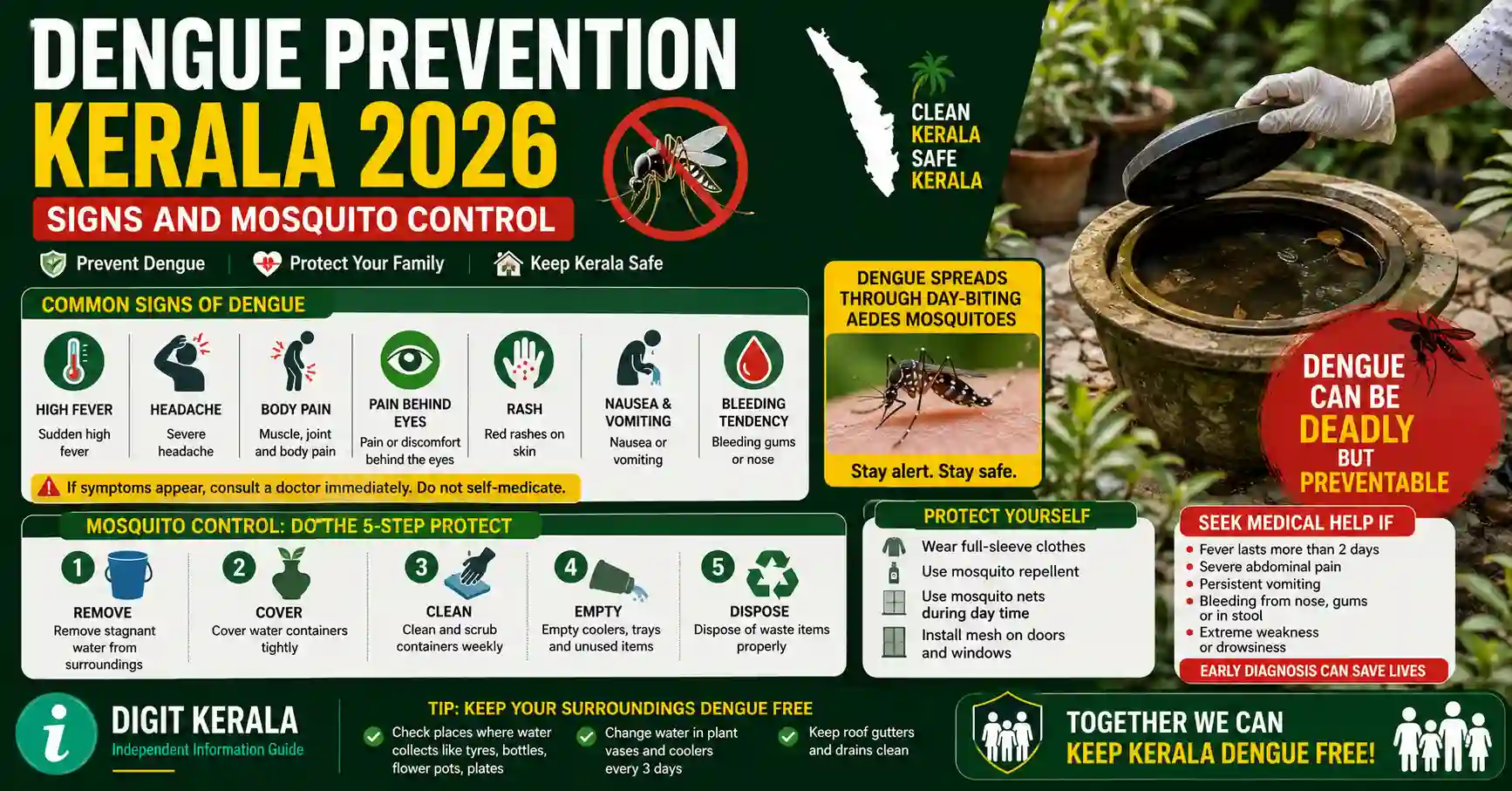
Dengue is a viral infection transmitted through the bite of infected Aedes mosquitoes. Kerala’s warm, humid climate and periods of heavy rainfall can create favourable conditions for mosquito breeding, particularly when water collects in containers around homes, workplaces and public areas.
Preventing dengue requires regular action by households and communities. Removing water-holding containers, protecting against mosquito bites and seeking timely medical advice when symptoms develop can reduce the risk of serious illness.
This guide explains dengue symptoms, urgent warning signs, mosquito-control measures and practical precautions for homes in Kerala.
Important: This article provides general health and safety information. It cannot diagnose dengue or replace an examination by a qualified medical professional. Anyone with fever or suspected dengue should obtain appropriate medical advice.
What Is Dengue?
Dengue is caused by the dengue virus. It spreads mainly when an infected Aedes mosquito bites a person.
A mosquito can acquire the virus after biting a person infected with dengue. It may later transmit the virus to another person through its bite.
Dengue does not usually spread directly from one person to another through ordinary contact, sharing food or sitting near an infected person.
According to the World Health Organization, many dengue infections cause no symptoms or only mild illness. Some infections, however, can progress to severe dengue and require hospital treatment.
Why Dengue Prevention Is Important in Kerala
Mosquitoes can breed in relatively small collections of water. Household objects that appear harmless may become breeding sites when they hold water for several days.
The risk can increase during and after rainy periods because water may collect in:
- Buckets and unused containers.
- Flowerpot trays.
- Discarded bottles and cups.
- Coconut shells.
- Tyres.
- Tarpaulin folds.
- Roof gutters.
- Refrigerator trays.
- Air-conditioner collection trays.
- Construction materials.
- Open tanks and barrels.
- Waste accumulated around buildings.
Dengue prevention should therefore continue throughout the year and not only after a local outbreak is reported.
Common Symptoms of Dengue
Symptoms may begin several days after the bite of an infected mosquito. Common symptoms listed by the World Health Organization include:
- High fever.
- Severe headache.
- Pain behind the eyes.
- Muscle, bone or joint pain.
- Nausea.
- Vomiting.
- Swollen glands.
- Skin rash.
- Tiredness or weakness.
These symptoms can also occur with other illnesses. Fever and body pain alone cannot confirm dengue.
A medical professional may recommend an examination or appropriate laboratory tests based on the symptoms, duration of illness and local disease situation.
Do not depend on social-media advice, appearance alone or an unverified home-testing method to diagnose dengue.
Warning Signs That Need Urgent Medical Care
Some patients can develop warning signs of severe dengue. These signs may appear as the fever starts to decrease, so a reduction in temperature should not automatically be treated as complete recovery.
Obtain urgent medical care if a person with suspected or confirmed dengue develops:
- Severe or persistent abdominal pain.
- Repeated or persistent vomiting.
- Blood in vomit or stool.
- Bleeding from the nose or gums.
- Rapid or difficult breathing.
- Extreme weakness.
- Unusual sleepiness.
- Restlessness or confusion.
- Pale, cold or clammy skin.
- Severe thirst or dry mouth.
- Dizziness, fainting or signs of collapse.
- Difficulty drinking or keeping fluids down.
- Reduced urination.
The National Centre for Vector Borne Diseases Control lists repeated vomiting, bleeding, sleepiness, restlessness, thirst, weak pulse and breathing difficulty among warning features requiring attention.
For a medical emergency in Kerala, call 108 for an ambulance or use the national emergency number 112. Kerala’s DISHA 1056 helpline may also provide health information and guidance. Do not delay emergency care while waiting for online advice.
Who May Need Closer Medical Observation?
Severe illness can occur in any patient. Closer medical assessment may be particularly important for:
- Infants and young children.
- Older adults.
- Pregnant women.
- People with diabetes, heart disease, kidney disease or another chronic condition.
- People with weakened immune systems.
- Anyone unable to drink enough fluids.
- Anyone with bleeding or other warning signs.
- People who have previously had dengue.
The medical professional should decide whether home care, observation, testing or hospital treatment is appropriate.
What to Do When Dengue Is Suspected
If fever or dengue-like symptoms develop:
- Contact a qualified medical professional.
- Follow the advice given regarding examination and testing.
- Rest and avoid unnecessary physical exertion.
- Drink fluids as advised, unless a medical condition requires fluid restriction.
- Monitor for warning signs, including after the fever decreases.
- Keep the patient protected from mosquito bites.
- Attend follow-up appointments and tests recommended by the treating clinician.
Protecting a patient from further mosquito bites is important because a mosquito that bites an infected person may later transmit the virus to someone else.
A mosquito net may be useful when the patient is resting or sleeping, including during the daytime.
Medicines and Self-Treatment Precautions
There is no specific home medicine that cures dengue. Treatment decisions depend on the patient’s condition and should be made with appropriate medical guidance.
The World Health Organization warns that medicines such as aspirin and ibuprofen can increase the risk of bleeding in dengue. Do not use painkillers, antibiotics, steroids, herbal preparations or injections without suitable medical advice.
Antibiotics do not treat the dengue virus. They should be used only when prescribed for a medically identified reason.
Do not copy another patient’s prescription or use medicine based only on a WhatsApp message, YouTube video or social-media post.
Do Not Depend Only on the Platelet Count
Platelet count may be one part of a medical assessment, but it is not the only factor used to determine the severity of dengue.
Doctors may consider:
- Symptoms and warning signs.
- Blood pressure and circulation.
- Hydration.
- Bleeding.
- Urine output.
- Breathing.
- Haematocrit and other test results.
- Existing medical conditions.
- Changes over time.
A patient should not be declared safe or seriously ill based on a single unreviewed platelet-count message.
Do not arrange platelet transfusions, medicines or hospital discharge based on informal advice. These decisions must be made by the responsible medical team.
How to Prevent Mosquito Breeding at Home
The most effective household action is to prevent water from remaining in containers where mosquitoes can breed.
Choose one fixed day every week to inspect the home and surrounding area.
Empty and Clean Water Containers
Empty buckets, flowerpot trays, pet-water containers and other water-holding items. Scrub the inside surfaces where practical before refilling them.
Simply pouring out the water may not always be sufficient if mosquito eggs remain attached to the container.
Cover Stored Water
Water tanks, barrels and storage containers should have properly fitted covers.
A loose cloth or damaged lid may leave enough space for mosquitoes to enter.
Dispose of Unwanted Containers
Remove or safely dispose of:
- Broken pots.
- Disposable cups.
- Bottles.
- Coconut shells.
- Food containers.
- Damaged buckets.
- Unused tyres.
- Other objects capable of holding rainwater.
Follow local waste-management rules instead of dumping these items in open areas.
Inspect Roofs and Gutters
Clear blocked gutters and drains. Check flat roofs, sunshades and tarpaulins for trapped water.
Water may remain in hidden folds or depressions even after the surrounding area appears dry.
Check Indoor Breeding Sites
Inspect less obvious indoor locations, including:
- Refrigerator defrost trays.
- Air-conditioner trays.
- Vases.
- Plant-propagation containers.
- Decorative water bowls.
- Bathroom buckets.
- Water stored for cleaning.
Clean and refresh these locations regularly.
Maintain Construction Sites
Construction sites may contain drums, curing tanks, plastic sheets, discarded containers and open materials that collect water.
Owners, contractors and workers should inspect these locations regularly and follow applicable public-health instructions.
Preventing Mosquito Bites
Aedes mosquitoes that spread dengue are active mainly during the daytime. Protection is therefore important during the day as well as in the evening.
Useful precautions include:
- Wearing clothing that covers the arms and legs when practical.
- Using mosquito screens on windows and doors.
- Repairing holes in screens.
- Using an appropriate mosquito repellent according to its label.
- Using mosquito nets for infants, sick people and anyone sleeping during the day.
- Keeping doors and windows screened where possible.
- Following official instructions for safe use of coils or vaporizers.
- Keeping the surroundings clean and free of water-holding waste.
Do not apply household insecticides directly to the skin. Use only products intended for personal use and follow their age restrictions, warnings and application instructions.
Protecting Babies and Children
Children should not be allowed to handle repellents, coils, insecticide sprays or electric vaporizers without adult supervision.
When using a personal mosquito repellent:
- Read the product label.
- Follow age restrictions.
- Avoid the eyes, mouth and injured skin.
- Do not allow a child to apply it independently.
- Wash hands after application.
- Store the product away from children.
Use mosquito nets, window screens and suitable clothing as additional protective measures.
Seek medical advice promptly when a child has persistent fever, repeated vomiting, unusual sleepiness, difficulty drinking, reduced urination or another concerning symptom.
Dengue Prevention at Schools and Workplaces
Schools, offices, shops, workshops and institutions should regularly inspect their premises.
Particular attention should be given to:
- Terrace areas.
- Roof gutters.
- Drinking-water storage.
- Garden containers.
- Discarded cups and bottles.
- Tyres.
- Construction areas.
- Refrigerator and air-conditioner trays.
- Waste-storage locations.
- Toilets and washing areas.
Schools should ensure that children are not asked to handle chemicals, insecticides or unsafe waste during cleanup activities.
A responsible adult should document and correct recurring mosquito-breeding locations.
Community-Level Prevention
Mosquitoes do not remain within the boundaries of a single house. One neglected property can affect nearby households.
Community action may include:
- Weekly inspection of shared spaces.
- Proper waste collection.
- Clearing blocked drains.
- Reporting abandoned water-holding waste.
- Maintaining public buildings and vacant plots.
- Cooperating with health workers.
- Following local-body mosquito-control notices.
- Sharing only verified health information.
Fogging or spraying may be used by authorised agencies in specific situations, but it does not replace the removal of breeding sites.
Residents should not carry out unsafe chemical spraying or mix pesticides without proper training and authorisation.
Common Dengue Myths
“Dengue mosquitoes breed only in dirty drains.”
Mosquitoes that spread dengue can breed in water collected in many household and outdoor containers. A container should not be ignored simply because the water appears clean.
“Dengue mosquitoes bite only at night.”
Aedes mosquitoes are active mainly during the daytime. Bite prevention is needed during the day.
“If the fever decreases, the patient has recovered.”
Warning signs of severe dengue can appear when the fever starts to fall. Continue monitoring the patient and follow medical advice.
“A low platelet count alone confirms severe dengue.”
Dengue severity cannot be assessed using one laboratory value alone. A qualified clinician must interpret symptoms, examination findings and test results together.
“Antibiotics cure dengue.”
Dengue is a viral infection. Antibiotics do not cure it and should be used only for a separate medical reason diagnosed by a clinician.
“A home remedy can replace medical treatment.”
No unverified juice, leaf extract, supplement or home preparation should replace medical assessment and monitoring.
When Should the Patient Return for Medical Review?
Follow the review schedule given by the treating medical professional.
Seek earlier care if:
- Symptoms become worse.
- New warning signs appear.
- The patient cannot drink.
- Vomiting continues.
- Bleeding develops.
- Urination decreases.
- Breathing becomes difficult.
- The patient becomes unusually sleepy or restless.
- The fever decreases but the patient appears weaker.
- A parent or caregiver is worried about a child’s condition.
Do not wait for every warning sign to appear before seeking help.
Preparing for a Medical Visit
Carry the following when available:
- A list of symptoms and when they began.
- Temperature records.
- Details of medicines already taken.
- Previous test reports.
- Information about allergies.
- A list of existing medical conditions.
- The patient’s regular medicines.
- Identification and relevant health-scheme information.
Tell the clinician truthfully about all medicines, supplements and home remedies already used.
Privacy and Misinformation Precautions
Health reports and prescriptions contain personal information.
Follow these precautions:
- Do not publish a patient’s laboratory report on social media.
- Hide names, phone numbers, addresses and identification numbers before sharing a report for an authorised purpose.
- Do not forward unverified outbreak statistics.
- Do not recommend another patient’s treatment.
- Confirm health alerts through official government channels.
- Do not pay anyone promising a guaranteed dengue cure.
- Avoid links selling unapproved medicines or test kits.
Use the Kerala Health Department portal and official public-health sources for current information.
Frequently Asked Questions
Can dengue spread directly from one person to another?
Dengue is mainly transmitted through infected Aedes mosquitoes. Ordinary contact with a patient does not usually transmit dengue.
Do dengue mosquitoes bite during the day?
Yes. The mosquitoes that spread dengue are mainly active during daylight hours. Daytime bite prevention is important.
Can dengue be confirmed from symptoms alone?
No. Dengue symptoms can resemble other illnesses. A qualified medical professional should decide whether testing is required.
Is a falling fever always a sign of recovery?
No. Warning signs can develop when the fever begins to decrease. Continue observation and follow medical advice.
Should every dengue patient be admitted to hospital?
Not necessarily. The appropriate level of care depends on the patient’s symptoms, warning signs, examination, test results and health conditions. The treating clinician should make this decision.
Is there a guaranteed home cure for dengue?
No. Unverified remedies should not replace professional medical care, hydration advice and monitoring.
How often should a home be checked for mosquito-breeding sites?
A thorough inspection should be conducted at least once every week and after rain. Frequently used water containers may need more regular attention.
What should I do during a medical emergency?
Call 108 for an ambulance or 112 for emergency assistance. Seek urgent medical care when severe warning signs are present.
Weekly Dengue-Prevention Checklist
Use this simple household checklist:
- Empty and scrub water-holding containers.
- Cover tanks and stored-water vessels.
- Clean flowerpot, refrigerator and air-conditioner trays.
- Remove bottles, cups, coconut shells and other waste.
- Check tyres, gutters, roofs and tarpaulins.
- Repair damaged window and door screens.
- Inspect areas around the home after rain.
- Protect anyone with fever from mosquito bites.
- Check family members for concerning symptoms.
- Follow verified local health instructions.
Consistent weekly action is more effective than waiting for mosquitoes to become visibly abundant.
Official References
- Kerala Health Department
- Kerala Health Department Communicable-Disease Materials
- National Centre for Vector Borne Diseases Control – Dengue Signs and Symptoms
- NCVBDC Dengue Guidelines
- World Health Organization – Dengue and Severe Dengue
Last reviewed: August 30, 2026.
Disclaimer: DIGIT KERALA is an independent information website and is not affiliated with the Kerala Health Department, Ministry of Health and Family Welfare, World Health Organization or any government agency. This article is provided for general awareness only and is not medical advice, diagnosis or treatment. Symptoms and individual medical needs vary. Consult a qualified medical professional for personal guidance and seek urgent care when warning signs are present.