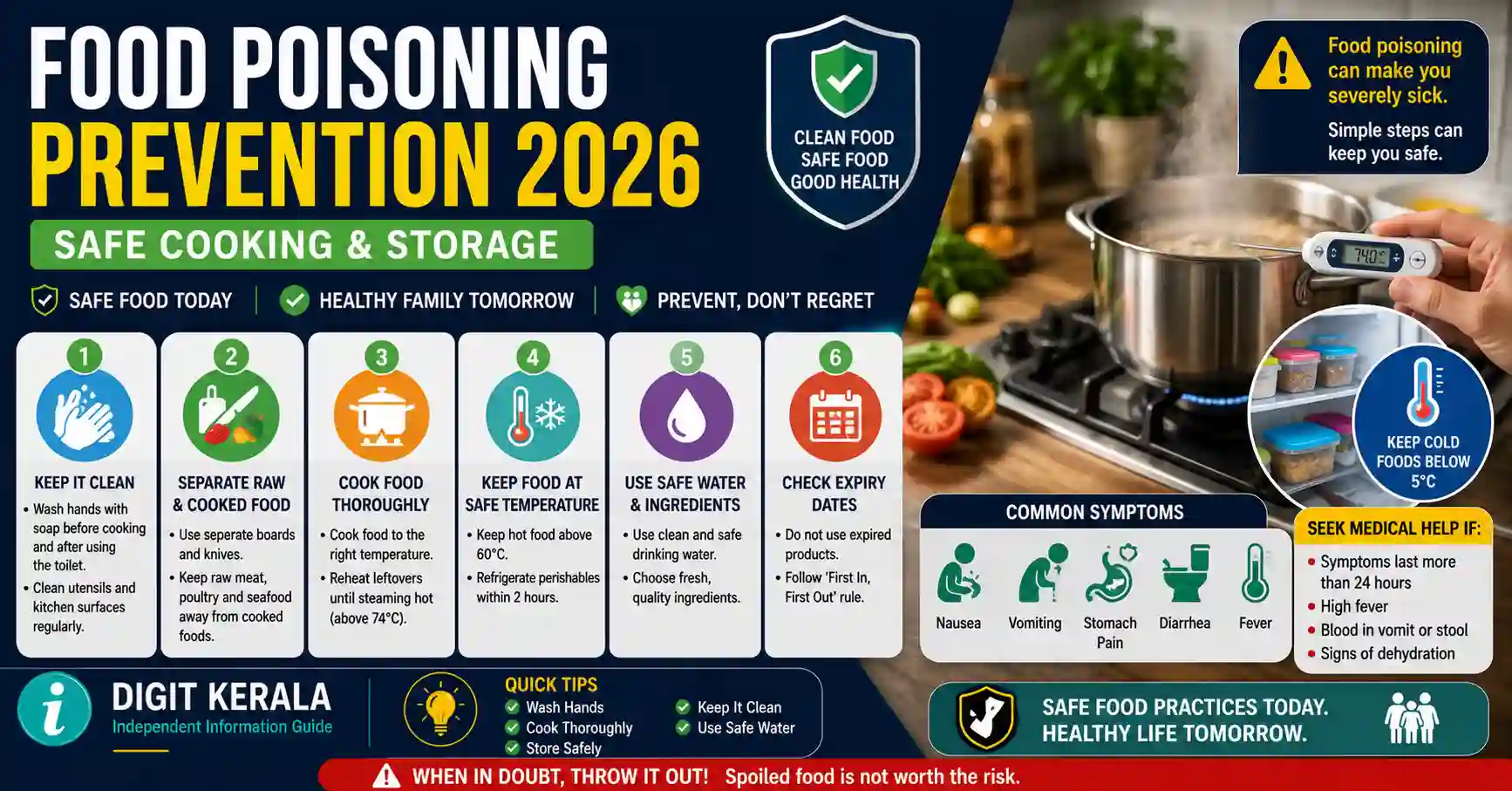
Food poisoning can occur when food or drinking water contains harmful microorganisms, toxins, chemicals or other contaminants.
Contamination may happen while food is produced, transported, stored, prepared or served. At home, common risks include poor hand hygiene, mixing raw and cooked food, incomplete cooking and leaving perishable food at unsafe temperatures.
Many food-safety risks can be reduced through proper cleaning, separation, cooking, refrigeration and careful selection of ingredients.
This guide explains practical food poisoning prevention measures based on guidance from the World Health Organization and official food-safety authorities.
Medical warning: This article provides general prevention information and cannot diagnose or treat an illness. Seek professional medical assistance when symptoms are severe, persistent or involve a child, pregnant person, older adult or person with a weakened immune system.
What Is Food Poisoning?
Food poisoning is a general term commonly used for illness linked to contaminated food or drink.
Possible causes can include:
- Bacteria.
- Viruses.
- Parasites.
- Toxins produced by microorganisms.
- Harmful chemicals.
- Contaminated water.
- Incorrectly stored food.
- Cross-contamination during preparation.
The food responsible may not always look, smell or taste spoiled. A normal appearance does not guarantee that food is safe.
Symptoms and their starting time can vary depending on the cause, amount consumed and health of the affected person.
Common Food Poisoning Symptoms
According to the official CDC food-poisoning guidance, commonly reported symptoms include:
- Diarrhoea.
- Stomach pain or cramps.
- Nausea.
- Vomiting.
- Fever.
Some illnesses begin within hours, while others may take several days to appear.
These symptoms can also occur with medical conditions unrelated to food. Do not assume that every episode of vomiting or stomach pain is food poisoning.
A qualified healthcare professional should evaluate concerning symptoms.
Who May Have a Higher Risk of Serious Illness?
Foodborne illness can affect anyone, but certain people may have a greater risk of serious complications.
These can include:
- Children younger than five.
- Pregnant people.
- Older adults.
- People with weakened immune systems.
- People receiving chemotherapy or other immune-suppressing treatment.
- People with certain chronic health conditions.
Food for a higher-risk person should be prepared and stored with particular care.
Contact a healthcare professional early if a high-risk person develops symptoms after consuming potentially unsafe food.
The Five Keys to Safer Food
The World Health Organization recommends five basic principles:
- Keep clean.
- Separate raw and cooked food.
- Cook thoroughly.
- Keep food at safe temperatures.
- Use safe water and raw materials.
These principles apply to homes, community kitchens, workplaces and many other food-preparation settings.
1. Keep Hands and Kitchen Surfaces Clean
Hands can transfer microorganisms to food, utensils and kitchen surfaces.
Wash hands thoroughly with soap and safe water:
- Before preparing food.
- Before eating or serving food.
- After using the toilet.
- After touching raw meat, poultry, fish or eggs.
- After handling waste.
- After coughing, sneezing or touching the face.
- After touching pets or animal waste.
- Before and after caring for an ill person.
- Whenever the hands become visibly dirty.
Dry hands using a clean towel or another hygienic method.
Do not depend solely on rinsing the fingertips with water. Clean between the fingers, around the nails and over the entire hand.
Clean Food-Preparation Surfaces
Clean and, when appropriate, sanitise:
- Cutting boards.
- Knives.
- Countertops.
- Plates.
- Storage containers.
- Mixer and blender parts.
- Refrigerator shelves.
- Reusable shopping bags carrying raw food.
- Cloths used around food-preparation areas.
A wiping cloth can spread contamination if it is repeatedly used without proper washing and drying.
Replace or thoroughly clean:
- Damaged cutting boards.
- Heavily scratched plastic containers.
- Cracked utensils.
- Sponges and cloths that cannot be cleaned properly.
Keep household cleaning chemicals away from food, utensils and children.
Protect Food From Insects and Animals
Flies, cockroaches, rodents and other pests can contaminate food and surfaces.
To reduce risk:
- Keep food covered.
- Use containers with secure lids.
- Empty waste bins regularly.
- Clean spilled food promptly.
- Keep pets away from food-preparation surfaces.
- Repair pest-entry points.
- Store ingredients above the floor.
- Do not use food with evidence of insect or rodent contamination.
Use pest-control products only according to their official instructions. Prevent chemicals from contacting food or food-preparation equipment.
2. Separate Raw and Cooked Food
Raw meat, poultry, seafood and their liquids can contain microorganisms that may spread to cooked or ready-to-eat food.
This transfer is known as cross-contamination.
Use Separate Equipment
When possible, use different:
- Cutting boards.
- Knives.
- Plates.
- Bowls.
- Storage containers.
If the same equipment must be used, wash it thoroughly before it touches cooked or ready-to-eat food.
Never return cooked food to an unwashed plate that previously held raw meat, poultry, fish or eggs.
Store Raw Food Carefully
Store raw animal products in clean, leak-resistant containers.
Keep them:
- Separate from cooked food.
- Separate from fruits and vegetables eaten raw.
- Below ready-to-eat food in the refrigerator.
- Covered to prevent liquid from dripping.
- Refrigerated or frozen as appropriate.
Do not allow raw-food packaging to contaminate countertops, shopping bags or refrigerator handles.
Wash hands after placing raw food in storage.
Do Not Spread Raw-Food Contamination
Activities that create splashes can spread microorganisms around the sink and kitchen.
Follow the current preparation instructions applicable to the food being handled.
After handling raw animal products:
- Wash the hands.
- Clean the sink when contaminated.
- Clean nearby surfaces.
- Wash utensils.
- Replace contaminated kitchen cloths.
- Avoid touching cooked food until the hands are clean.
Do not prepare a salad using the same unwashed knife or cutting board used for raw meat.
3. Cook Food Thoroughly
Proper cooking reduces the risk from many harmful microorganisms.
WHO guidance recommends thorough cooking, particularly for:
- Meat.
- Poultry.
- Eggs.
- Seafood.
- Minced meat.
- Large meat portions.
- Soups and stews.
The WHO’s food-safety material refers to a temperature of at least 70°C for thorough cooking of relevant foods.
A food thermometer can help check the internal temperature. Measure the thickest part without touching bone or the cooking container.
The appropriate safe temperature and cooking method can vary according to the food. Follow official product, appliance and food-safety instructions.
Check More Than the Outer Appearance
Food can appear cooked on the outside while remaining undercooked internally.
Pay particular attention to:
- Thick meat pieces.
- Whole poultry.
- Minced-meat products.
- Large batches.
- Stuffed foods.
- Reheated food.
- Frozen food cooked without complete thawing.
- Microwave cooking with uneven heating.
Stir microwave-heated food where appropriate and allow any instructed standing time.
Do not taste partly cooked food to decide whether it is safe.
Reheat Leftovers Thoroughly
Leftovers should be reheated until properly hot throughout.
When reheating:
- Use only the amount required.
- Stir soups, sauces and curries.
- Check the centre of thick food.
- Avoid repeatedly heating and cooling the same batch.
- Follow product-specific reheating instructions.
- Discard food when its safety is uncertain.
Reheating cannot make every improperly stored food safe. Some toxins may remain even after heating.
Food that has been kept under unsafe conditions should not be consumed merely because it has been boiled again.
4. Keep Food at Safe Temperatures
Microorganisms can multiply quickly when food remains at unsafe temperatures.
WHO’s Five Keys guidance recommends:
- Not leaving cooked food at room temperature for more than two hours.
- Refrigerating cooked and perishable food promptly.
- Keeping refrigerated food preferably below 5°C.
- Keeping food intended to be served hot above 60°C.
- Not thawing frozen food at room temperature.
These are general food-safety principles. Follow specific product-storage instructions when they require stricter conditions.
Refrigerate Perishable Food Promptly
Examples of food that may require refrigeration include:
- Cooked rice.
- Cooked meat and poultry.
- Fish and seafood.
- Milk and dairy products.
- Cut fruits.
- Prepared salads.
- Gravies and curries.
- Food containing eggs.
- Leftover restaurant food.
- Certain opened packaged foods.
Check the label for refrigeration instructions.
Do not overload the refrigerator so heavily that cold air cannot circulate properly.
A refrigerator thermometer can help confirm the actual temperature.
Divide Large Quantities Before Refrigeration
A large pot of hot food can cool slowly.
Where appropriate:
- Divide food into smaller portions.
- Use clean, shallow containers.
- Cover and refrigerate according to safe handling guidance.
- Label containers with the preparation date.
- Avoid mixing a fresh batch with an older batch.
Do not place cooked food into a container that previously held raw food without properly washing it.
Thaw Frozen Food Safely
Do not leave frozen meat, fish or other perishable food on a kitchen counter for an extended period.
Safer thawing methods can include:
- Thawing inside the refrigerator.
- Using a microwave followed by immediate cooking.
- Following the manufacturer’s approved cooking instructions.
- Using another officially recommended method appropriate for the food.
Liquid released during thawing should not contact other food.
After thawing, clean contaminated surfaces and wash hands thoroughly.
Food Safety During a Power Cut
Power interruptions can affect refrigerated and frozen food.
During a power cut:
- Keep refrigerator and freezer doors closed as much as possible.
- Avoid repeatedly checking the food.
- Monitor how long the power has been unavailable.
- Check appliance-temperature information when power returns.
- Follow official local food-safety advice after a prolonged interruption.
- Discard food when safe temperature control cannot be confirmed.
Do not taste food to determine whether it remained safe.
Smell and appearance alone cannot reliably confirm food safety.
5. Use Safe Water and Raw Materials
Water used for drinking, cooking, making ice and washing ready-to-eat food should be from a safe source.
When water safety is uncertain:
- Follow instructions issued by the local authority.
- Use an officially recommended treatment method.
- Avoid ice from an unknown source.
- Do not use unsafe water to dilute juice or prepare baby food.
- Clean water-storage containers regularly.
- Keep stored water covered.
- Avoid dipping dirty cups or hands into the container.
During a public-health or contamination alert, follow the latest Kerala Health and local-authority instructions.
Select Food Carefully
When buying food:
- Choose fresh, wholesome ingredients.
- Check packaging for damage.
- Avoid swollen, leaking or badly dented containers.
- Check the date marking.
- Read storage instructions.
- Confirm that chilled food is cold.
- Buy frozen food near the end of the shopping trip.
- Transport perishable food home promptly.
- Avoid food exposed to insects, dust or dirty water.
- Purchase from a hygienic and identifiable seller.
Do not consume packaged food if the seal is unexpectedly broken or the product appears tampered with.
Understand Date Labels and Storage Instructions
Packaged food can display information such as:
- Date of manufacture.
- Date of packing.
- Best-before date.
- Use-by or expiry information.
- Storage conditions.
- Instructions after opening.
- Batch or lot details.
- Manufacturer information.
- FSSAI licence or registration information.
Read the complete label.
A product’s storage requirement can change after opening. For example, an unopened item that can remain on a shelf may require refrigeration after it is opened.
Do not transfer packaged food to another container without preserving important date and identification information.
Safe Handling of Cooked Rice
Cooked rice is common in Kerala households and should be handled carefully.
After cooking:
- Serve it promptly or maintain safe temperature control.
- Refrigerate leftovers without unnecessary delay.
- Use a clean, covered container.
- Avoid leaving cooked rice at room temperature for extended periods.
- Reheat thoroughly when appropriate.
- Discard it if safe storage cannot be confirmed.
Do not mix newly cooked hot rice with an old leftover batch for continued storage.
The same caution applies to cooked noodles, pasta and other prepared starchy foods.
Safe Handling of Milk and Dairy Products
For milk and dairy products:
- Check the package condition and date.
- Follow the storage instructions.
- Keep products refrigerated when required.
- Avoid using milk with unexpected odour, texture or packaging changes.
- Do not leave dairy-based food in a hot vehicle.
- Use clean utensils.
- Do not return unused milk from a serving container to the original package.
- Refrigerate opened products according to the label.
Use pasteurised milk when recommended by official health guidance.
Extra care is required when preparing food for infants, pregnant people, older adults and immunocompromised individuals.
Safe Handling of Eggs, Meat and Seafood
These foods require careful temperature control and cooking.
- Purchase from a clean and reliable source.
- Refrigerate promptly.
- Prevent leakage onto other food.
- Wash hands after handling.
- Use separate utensils.
- Cook thoroughly.
- Avoid tasting raw mixtures.
- Keep cooked items away from raw products.
- Do not use products with damaged packaging or signs of spoilage.
People at increased risk of severe foodborne illness should obtain personalised advice from a healthcare professional about foods to avoid.
Packing Food for School or Work
Food carried outside the home may remain unrefrigerated for several hours.
Consider:
- Using a clean lunch box.
- Packing food shortly before leaving.
- Using an insulated container when appropriate.
- Keeping hot food hot and cold food cold.
- Avoiding highly perishable food when temperature control is unavailable.
- Cleaning the lunch box after each use.
- Preventing raw and cooked food from touching.
- Discarding food that has remained under uncertain conditions.
Children should be reminded to wash their hands before eating and not share food when allergy or illness concerns exist.
Food Safety While Travelling
During travel:
- Use safe drinking water.
- Avoid ice from an uncertain source.
- Choose food that is freshly cooked and served hot.
- Avoid food that has remained uncovered.
- Check the cleanliness of utensils and serving areas.
- Keep packaged snacks sealed until required.
- Wash or peel suitable fruits before eating.
- Carry perishable food only with appropriate temperature control.
- Avoid consuming food when its storage history is unknown.
A busy food outlet is not automatically safe, and an empty outlet is not automatically unsafe. Observe basic hygiene and food-handling conditions.
When Several People Become Ill
If multiple people who consumed the same food develop similar symptoms:
- Stop serving the suspected food.
- Do not give it to another person or animal.
- Keep the packaging, receipt and order details when available.
- Note what was eaten and when.
- Record when symptoms started.
- Contact a healthcare professional.
- Follow the instructions of the responsible health or food-safety authority.
- Preserve a sample only when an authorised official or healthcare professional instructs it.
- Do not publicly accuse a business without verified evidence.
The most recently eaten food is not always the cause. Some foodborne illnesses take time to produce symptoms.
What to Do If Symptoms Develop
A person with vomiting or diarrhoea can lose body fluids.
Contact a healthcare professional for appropriate advice, especially when symptoms are frequent or the affected person is at increased risk.
Avoid taking antibiotics, anti-diarrhoeal medicine or other treatment without appropriate professional guidance.
Seek urgent medical assistance for serious symptoms such as:
- Blood in the stool.
- Inability to keep liquids down.
- Signs of dehydration.
- Very little urination.
- Severe weakness or dizziness.
- Confusion.
- Breathing difficulty.
- Severe or worsening abdominal pain.
- Persistent diarrhoea.
- High fever.
- Symptoms during pregnancy.
- Rapid deterioration.
- Serious symptoms in a young child or older adult.
Call Kerala’s 108 Ambulance or 112 Emergency Response for a potentially life-threatening condition.
Kerala’s DISHA health helpline 1056 can provide eligible health information and guidance, but it should not delay emergency assistance.
Prevent Dehydration
Vomiting and diarrhoea can cause dehydration.
Possible warning signs include:
- Dry mouth.
- Unusual thirst.
- Reduced urination.
- Dark urine.
- Dizziness when standing.
- Unusual tiredness.
- Few or no tears in a crying child.
- Unusual sleepiness or irritability in a child.
Follow the advice of a qualified healthcare professional regarding fluids and oral rehydration.
Infants, young children, older adults and people with medical conditions can become unwell more quickly. Do not delay professional advice.
Do Not Depend on Home Remedies
Home remedies cannot identify the organism, toxin or other cause of illness.
Avoid claims that a particular drink, herb, spice or food can:
- Cure all food poisoning.
- Remove every toxin.
- Replace medical treatment.
- Prevent dehydration in every patient.
- Make dangerously stored food safe.
Do not force a person to vomit unless a qualified emergency professional specifically instructs it.
For suspected chemical poisoning, call 112 or 108 and provide the product or substance information when available.
Kitchen Food-Safety Checklist
Before preparing food:
- Wash hands.
- Check water safety.
- Clean surfaces.
- Inspect ingredients.
- Check package dates and condition.
- Separate raw and ready-to-eat items.
During preparation:
- Use separate utensils.
- Prevent cross-contamination.
- Cook food thoroughly.
- Avoid touching food after handling waste or a phone without washing hands.
- Keep cleaning chemicals away.
After the meal:
- Refrigerate perishable leftovers promptly.
- Label stored food.
- Clean utensils and surfaces.
- Empty waste appropriately.
- Store food in covered containers.
- Check that the refrigerator door is closed.
Frequently Asked Questions
What are the five main food-safety rules?
WHO recommends keeping clean, separating raw and cooked food, cooking thoroughly, keeping food at safe temperatures and using safe water and raw materials.
Can food look normal and still cause illness?
Yes. Contaminated food may not always have an unusual smell, taste or appearance.
How long can cooked food remain at room temperature?
WHO’s general guidance says cooked food should not be left at room temperature for more than two hours. Hot weather and product-specific instructions may require faster refrigeration.
What refrigerator temperature is recommended?
WHO recommends refrigerating cooked and perishable food promptly, preferably below 5°C.
Can reheating make every leftover safe?
No. Reheating does not correct every problem caused by unsafe storage, and certain toxins may remain. Discard food when its storage safety is uncertain.
Should raw and cooked food use the same cutting board?
Separate cutting boards are preferable. If only one is available, it must be thoroughly cleaned before being used for cooked or ready-to-eat food.
Is smelling food enough to check whether it is safe?
No. Harmful contamination may be present without an unusual smell.
Who has a higher risk of severe food poisoning?
Young children, pregnant people, older adults and people with weakened immune systems can have a higher risk of serious illness.
When should medical help be sought?
Seek medical help for severe, persistent or worsening symptoms, blood in the stool, repeated vomiting, dehydration, high fever or symptoms affecting a higher-risk person.
Which Kerala number can be called during a medical emergency?
Call 108 for an emergency ambulance or 112 for integrated emergency assistance. DISHA 1056 can provide general health guidance but should not delay emergency care.
Official References
- FSSAI Official Website
- World Health Organization – Five Keys to Safer Food
- WHO Five Keys to Safer Food Manual
- CDC Food Poisoning Symptoms
- CDC Food Safety Information
- Kerala Health Portal
- Kerala DISHA Health Helpline
- Kerala Emergency Helpline 112
Last reviewed: August 30, 2026.
Disclaimer: DIGIT KERALA is an independent information website and is not affiliated with FSSAI, WHO, CDC, Kerala Health Department, DISHA or any government or healthcare organisation. This article provides general food-safety and prevention information only. It is not a diagnosis, treatment plan or substitute for advice from a qualified healthcare professional. Food-safety recommendations and official services may change. Seek professional medical assistance for concerning symptoms and call 108 or 112 during a potentially life-threatening emergency.